If you have been diving for a while and still have not put your head underwater in the Sea of Cortez, an important piece is missing from your map. Ask any diver who has been to La Paz whether they would return. The answer will always be: again and a thousand times over.
Located 30 kilometers from La Paz, in Baja California Sur, this island packs into a relatively small area a variety of underwater landscapes and wildlife encounters that are hard to find together in any other destination. Rocky reefs, sea fans, shipwrecks, and a colony of sea lions that have shared the water with divers for generations.
A Natural Heritage Site underwater:
Espíritu Santo is a UNESCO World Natural Heritage Site and has been a National Park since 2007, which translates into access regulations, visitor number controls, and effective ecosystem protection. Underwater, that is noticeable: the reefs are in good condition, the wildlife has not been driven away, and the dive sites maintain a level of quality that deteriorates over the years in unprotected destinations.
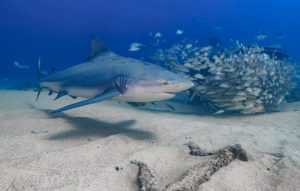
The numbers support its reputation: more than 890 fish species in its waters, around 90 of them endemic to the Sea of Cortez, and more than 4,500 recorded species of marine invertebrates. There is not much more to say.
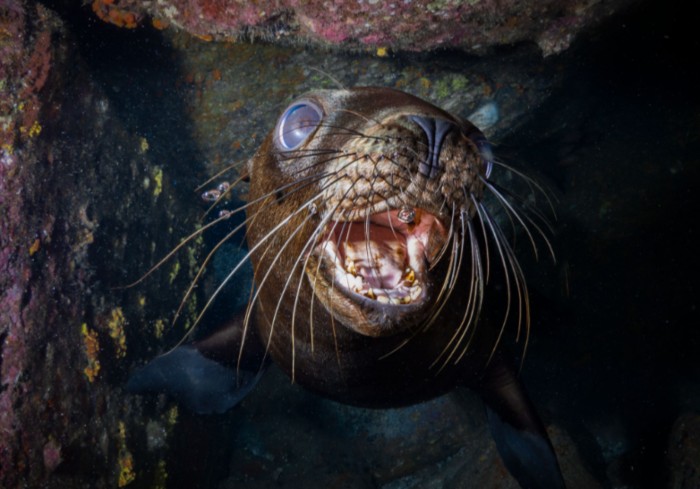
What will you find while diving here?
Los Islotes and the sea lion colony
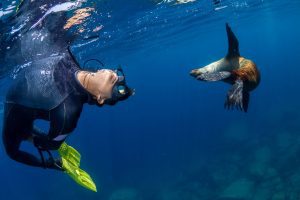
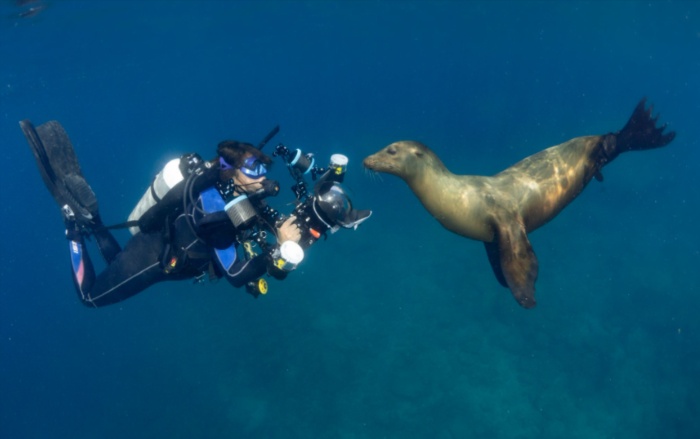
Espíritu Santo’s most iconic dive. Los Islotes, at the northern end of the archipelago, is home to a sea lion colony where the females and juveniles take center stage: curious, agile, and completely at ease around divers. It is not unusual for them to approach on their own, play around your regulator, or imitate your movements from very close by.
It is an active dive, difficult to predict, and that is exactly what makes it so good. To learn more about how encounters with sea lions work and what to expect before entering the water, we have a complete guide here: Everything about diving with sea lions.
One important fact: access to Los Islotes is restricted from June to August because of the breeding season. CONANP (Mexico’s National Commission of Natural Protected Areas) closes the area to protect the reproductive process, and that must be respected.
The Fang Ming: the shipwreck with the most history in the Sea of Cortez
The Fang Ming is a Chinese cargo ship seized by the Mexican Navy in 1995 while attempting to transport undocumented immigrants to California. It was sunk in 1999 at a depth of 18 meters to create an artificial reef, and today it is one of the most interesting shipwrecks in all of Mexico.
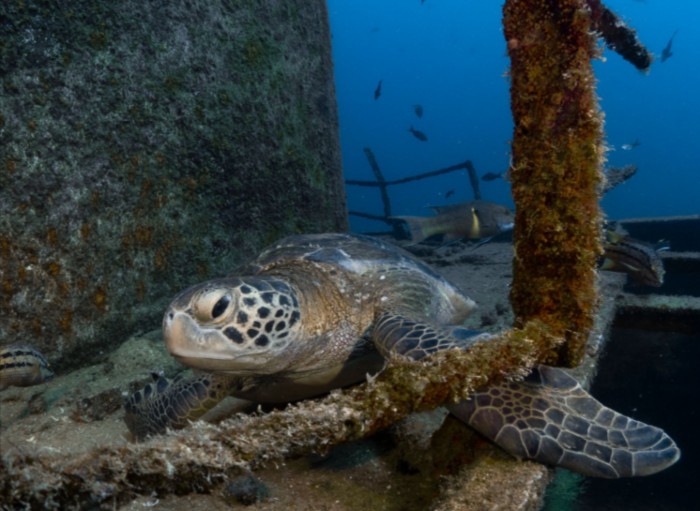
What makes it special is not only its history, but also how it has evolved: its structures are now colonized by corals, moray eels, octopuses, and reef fish, while turtles often rest on the deck. It has windows and passageways adapted for recreational diving, making the interior exploration accessible and safe. At 18 meters, it is a comfortable dive for Open Water divers.
The Salvatierra and Swanee Reef
South of the island, the Salvatierra ferry sank in 1976 after colliding with the natural Swanee Reef. Today, the reef is one of the favorite sites among underwater photographers: bright, with good visibility, and home to a mix of nudibranchs, rays, moray eels, and large schools of fish that also attract sea lions and seabirds from the area.
The depth is around 10 meters, perfect for taking all the time you need without watching the clock.
Rocky reefs and marine life
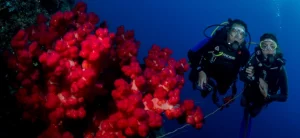
Beyond the best-known sites, the rocky reefs around Espíritu Santo offer several dives without becoming repetitive. Sea fans, parrotfish, angelfish, barracudas, groupers, and turtles that barely react when you approach.
At certain times of year, mobula rays (rays smaller than giant manta rays) gather in groups at the surface to feed, a sight that is difficult to describe in words when seen from below.
Diving conditions: what the water gives you and what it demands
Visibility in the Sea of Cortez regularly exceeds 20 meters under normal conditions. Water temperature ranges from 22°C in winter to 29-30°C in summer, which directly determines the wetsuit you need: a 5 mm suit for the colder months, and a 3 mm suit or even a rash guard for summer.
The dive sites around Espíritu Santo range from 5 to 18 meters deep, making them accessible to divers with an Open Water certification. This is not a destination of great depths or extreme currents: it is a destination where the spectacle is close and within reach of divers of any experience level.
When sea conditions are not favorable, something that can happen especially during hurricane season (August-September), local operators adjust the plan. On some days, the best diving takes place at another spot in the bay, and that is also part of the experience of diving in a sea with a character of its own.
When should you go?
- October to May is the most balanced window: clear skies, calm seas, and high visibility. November and December are especially good because they combine water that is still warm with stable conditions and none of the summer humidity.
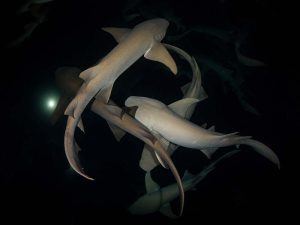
- June to September brings warmer water and more pelagic wildlife activity, with mobula rays and whale sharks appearing more frequently near La Paz. The downside is hurricane season between August and September, which can reduce the number of diving days with little advance notice.
Espíritu Santo is only the gateway to the Sea of Cortez. To discover the rest of what lies beneath the water in Baja California Sur, keep reading our articles about diving in Baja California Sur and find out why Cousteau was not exaggerating when he called this sea the aquarium of the world
Related articles: