If you’re reading this, it’s because you already have one of the most epic diving trips in the world in mind.
The Maldives is not just any destination. It is the kind of place every diver has heard about, seen in photos that look almost unreal, and where, once you finally arrive, you realize that reality exceeds every expectation.
But before you dive into the Indian Ocean alongside manta rays, whale sharks, and schools of fusiliers forming shimmering walls of silver, there is something less glamorous but just as important to discuss: what to pack.
I am not going to tell you the obvious here. I will get straight to the point and focus on what truly makes a difference when you go diving in the Maldives.
Diving gear: what you absolutely need to bring
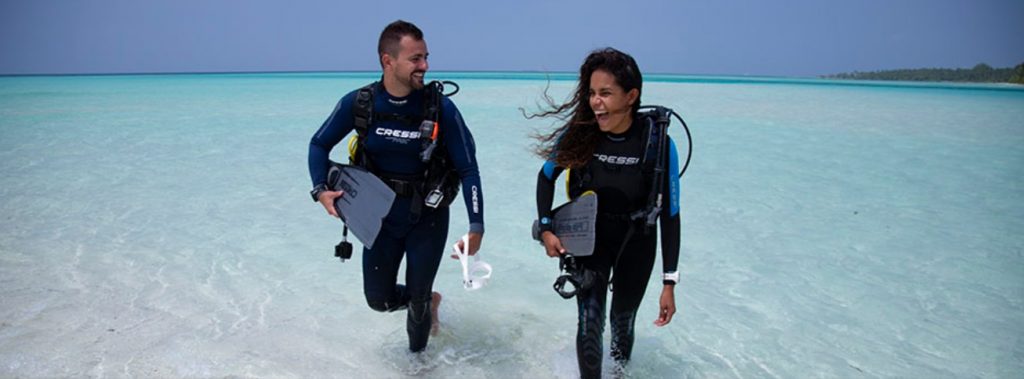
- Wetsuit: the big dilemma
Water temperatures in the Maldives are usually around 28–30°C at the surface, but at depth—especially in channels and thilas exposed to currents—they can drop to 24–25°C. If you tend to feel the cold, you will notice the difference.
My recommendation is a full-length 3 mm wetsuit. It is lightweight, easy to pack, and suitable for most dives. If you plan to do several dives a day—and in the Maldives, three or four dives daily is common—the neoprene also protects you from equipment chafing and minor scrapes against the reef.
Some divers choose a rash guard for shallower dives. That can work well, but if I had to choose only one option, I would take the 3 mm wetsuit.
- Regulator and dive computer: non-negotiable
I know that in many destinations you can rent a regulator without any major problems. You can do the same in the Maldives. But there is something invaluable about knowing your own equipment. In an environment with currents and visibility of 20–30 metres, sometimes more, you want to be free to enjoy the dive rather than wondering whether a rented regulator is breathing properly.
One thing I have learned is that, if you own a regulator, it is better to carry it in your hand luggage. It reduces the weight of your checked baggage and, because it is a delicate piece of equipment, keeping it with you also helps ensure it arrives safely.
And bring your dive computer. This is non-negotiable: in the Maldives, you will often complete several dives in succession, with varied profiles, so you need to monitor your data accurately in real time.
- BCD: the space dilemma
A BCD takes up a lot of room. If you are travelling with hand luggage only or dealing with strict weight limits, I understand why renting one may be tempting. I always bring mine. However, if you have to choose between bringing your BCD or your regulator, take the regulator. BCDs are more standardised and generally easier to adjust to.
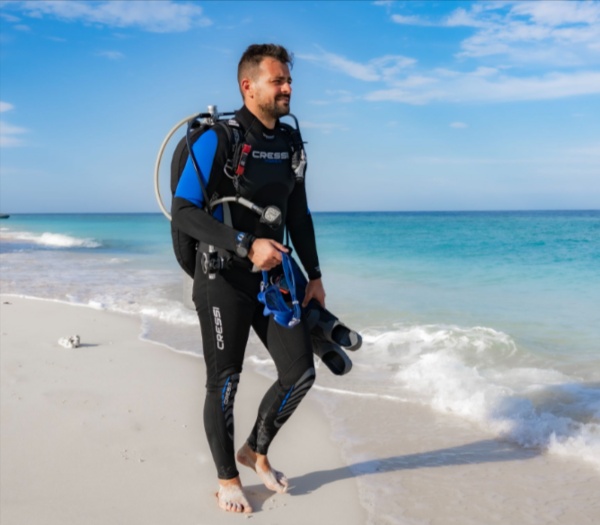
What absolutely deserves a place in your suitcase
- Mask: it is your window into the underwater world. Do not leave it to chance.
- Fins: proper diving fins, not snorkelling fins. The Maldives has strong currents, so you need power.
- Dive light or torch: for seeing corals, caves, and night dives. Night diving in the Maldives is spectacular.
- SMB (surface marker buoy) and reel: essential on every dive.
- Reef hook: in the Maldives, this is not an optional accessory; it is part of the basic kit. At some dive sites, the current can sweep you away, and a reef hook allows you to stay in place and enjoy the action without wasting energy or air.
- Thin gloves: not for warmth, but for taking photos near the reef and as part of your safety protocol.
Underwater photography equipment
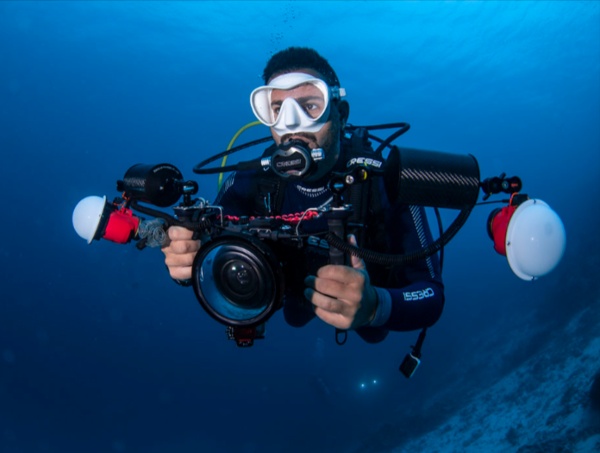
The Maldives is one of those destinations that will make you want to photograph everything. The problem is that, unless you are properly prepared, your photos may not do justice to what you see.
If you own an underwater camera, bring it. If you do not, consider renting a GoPro or a housing for your camera. At the very least, take a waterproof phone case for snorkelling photos.
Accessories that make a real difference:
- Red or magenta filter: to compensate for the blue colour cast underwater.
- Spare battery: the relatively cooler conditions and intensive use can drain it faster than expected.
- Plenty of memory cards: you will take more photos and videos than you think.
What is not diving gear but is just as important
Sun protection
The sun in the Maldives is relentless. However, keep in mind that the Maldivian reefs are especially fragile, and many areas are protected marine reserves. Always use a mineral, reef-safe sunscreen. Avoid products containing oxybenzone or octinoxate. There are specific brands formulated to minimise harm to coral reefs.
Seasickness medication
If you are staying on a liveaboard, the Indian Ocean can catch you by surprise. Rough weather is not necessary for seasickness to strike: the movement of the boat during overnight crossings can affect even experienced divers. Bring Biodramina or the motion-sickness medication you normally use, and take it before you need it, not afterwards.
Lightweight, quick-drying clothing
Between dives, you will spend most of your time on the boat or at the beach. Pack quick-drying clothes, swimwear, a lightweight windbreaker for evenings on deck, and little else. The Maldives is not a destination where you need formal or city clothing.
Documentation
- A valid passport with at least six months’ validity from your date of entry
- Travel insurance that includes scuba diving coverage and hyperbaric chamber treatment
- Your diving certification card, ideally Advanced Open Water or above, and your logbook
- Your completed IMUGA form before departure, as it is required to enter the Maldives
- Printed or downloaded copies of your liveaboard or resort bookings
One final piece of advice, from one diver to another
I have dived in many places around the world, but there is something special about the Maldives that I still cannot fully explain. Perhaps it is the sheer scale of what you see: manta rays gliding overhead, whale sharks passing close by, and channels filled with grey reef sharks and whitetip reef sharks.
Bring the equipment you need, but do not become obsessed with packing everything perfectly. What you must not forget is the right attitude: be patient with the currents, respect the reef, and keep your eyes wide open.
Are you planning your next expedition to the Maldives? At Te Moana Expeditions, we create tailor-made diving itineraries for divers looking for more than a standard underwater holiday. Tell us what you have in mind, and we will make it happen.