There are diving destinations in Indonesia that any diver will recognise instantly: Raja Ampat, Komodo, Lembeh… but there is a vast bay in northern Papua that remains off many divers’ radar: Cenderawasih.
And that is precisely part of its appeal. Diving here combines remarkably frequent encounters with whale sharks, remote reefs, endemic species and World War II wrecks.
A single expedition can take you from a bagan surrounded by whale sharks to a sunken aircraft or a reef where you are unlikely to encounter another boat.
Where is Cenderawasih and what makes it different?
Cenderawasih Bay lies in Indonesian Papua and is home to Teluk Cenderawasih National Park, one of the country’s largest marine protected areas.
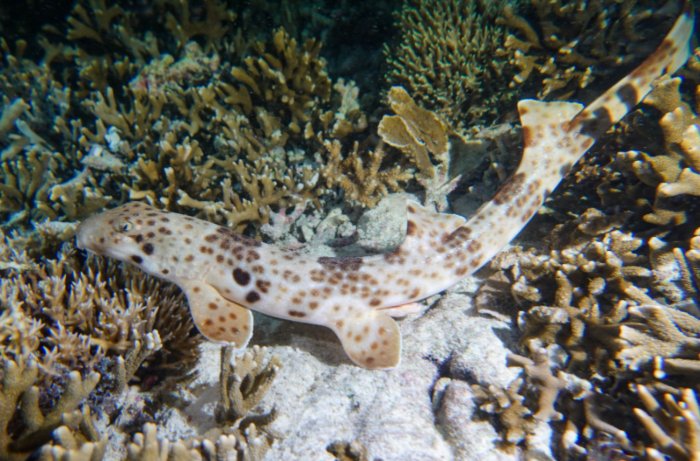
Its geography has encouraged a degree of biological isolation over thousands of years, helping to explain the presence of distinctive species and populations. These include Gale’s epaulette shark (Hemiscyllium galei), one of the small walking sharks associated with this region, as well as endemic fish such as Cirrhilabrus cenderawasih.
For experienced divers, Cenderawasih is not necessarily a destination defined by extreme currents or pelagic encounters on every dive. Its appeal lies elsewhere: biodiversity, unusual marine species, rarely visited reefs and a genuine sense of exploration.
Whale sharks in Kwatisore
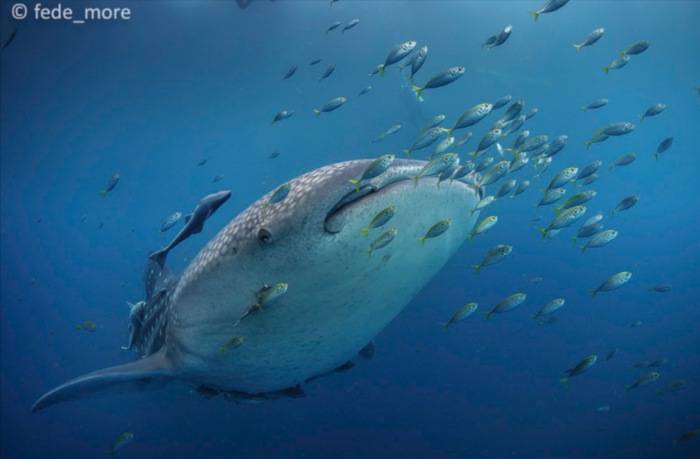
One of Cenderawasih’s most iconic sights is several whale sharks gathering around the bagans, the traditional fishing platforms of Kwatisore. At night, lights are used to attract small pelagic fish, drawing in these giants, which return to the area with remarkable regularity.
What makes this so unusual is that it is not simply a seasonal migration. Researchers have spent years studying this population using photo identification and fitting some individuals with satellite transmitters on their dorsal fins to better understand their movements.
This tracking has shown that many spend long periods within the bay, although they also venture into much deeper waters. During these excursions, they can descend to depths of more than 1,000 metres, with recorded dives approaching 1,800 metres, before returning to the coastal areas and bagans.
What’s more, in Cenderawasih you can scuba dive with whale sharks rather than being limited to snorkelling. These dives are generally shallow, with little current, giving divers plenty of time to observe their behaviour and experience one of Indonesia’s most memorable marine encounters.
Reefs, endemic species and marine life
At dive sites such as Sewandeh, Slamipien, Wild Fish Ridge, Tanjung Mangguar, Pulau Roon and Purup, you will find hard coral gardens, exposed ridges, walls, gorgonian sea fans and reefs teeming with fish.
- Sewandeh stands out for its abundance of marine life and the presence of reef sharks.
- Slamipien is known for its shallow hard coral gardens.
- Wild Fish Ridge offers a more exposed dive profile, where it is worth keeping an eye on both the reef and the open blue.
It is also a rewarding destination for divers who enjoy searching for less obvious species. Alongside walking sharks, you may encounter pygmy seahorses, frogfish, nudibranchs and other critters.
World War II wrecks
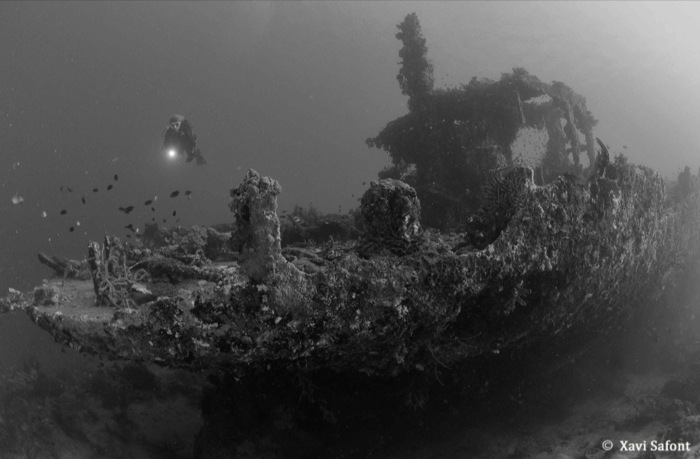
New Guinea was the scene of major military operations during World War II, and the region still holds numerous aircraft and vessel wrecks.
On a comprehensive itinerary, divers may encounter a PBY Catalina near Biak, the remains of a P-38 Lightning off Pulau Rouw, a Japanese Zero aircraft near Roon, landing craft at Pulau Manim and several Japanese wrecks around Manokwari.
What experience level do you need to dive in Cenderawasih?
Many dives are not particularly demanding, but a full expedition does require a degree of independence and confidence underwater.
Some reefs are easy to dive, and whale shark encounters usually take place in fairly calm conditions. However, you may also come across walls, exposed reefs, currents, entries from tender boats, wrecks and dive profiles approaching 30 metres.
That is why we recommend a minimum of Advanced Open Water or an equivalent certification, good buoyancy control, practical experience diving in currents and confidence using a DSMB.
On a liveaboard, you may also complete 3 or 4 dives a day, including night dives on some days. Having a Nitrox certification is therefore particularly useful for managing nitrogen exposure over several consecutive days of diving.
When is the best time to dive in Cenderawasih?
Diving in Cenderawasih is possible for much of the year, and whale sharks are present as a resident population, although the frequency of encounters can vary. Some studies have recorded peaks in sightings at certain times of year, but there is no short, clearly defined season as there is at some other destinations.
For liveaboards, the most common operating window is roughly June to October, with July, August and September among the most popular months. The bay’s sheltered geography makes it possible to operate at a time when other parts of Indonesia may be more affected by the monsoon.
As a general guide:
- Water temperature: 27–30°C.
- Visibility: approximately 10–30 metres, depending on the area.
- Currents: usually mild to moderate, with stronger currents around certain headlands and exposed reefs.
Why explore Cenderawasih on a liveaboard?
Distances within Cenderawasih are vast and many of its best dive sites are scattered across islands, atolls and areas with virtually no infrastructure.
A liveaboard makes it possible to cover long distances overnight and wake up right above the next dive site.
It is a destination for divers looking for something less familiar, who enjoy identifying an endemic species as much as exploring a wreck, and who value that increasingly rare feeling of diving somewhere genuinely remote.
Keep exploring Indonesia underwater
Cenderawasih is just one of the many sides of diving in Indonesia. Raja Ampat, Komodo, Togian, Bali and other regions offer completely different experiences.
You can discover more of these destinations on our blog. And if you would like to experience them first-hand, at Te Moana Expeditions we offer expeditions to Cenderawasih and other diving itineraries across Indonesia, designed to explore each region at its best time of year.