In the previous blog post, we explained how marine ecosystems work through food webs. We also talked about coral reefs and their founding members (polyps and zooxanthellae).
Now you already know how an ecosystem is organized, the role each living being plays within it, and how algae, animals, and even bacteria interact with one another.
But now, how can we tell whether an ecosystem is healthy, whether it is in good condition, whether its members are in balance within this food web, and whether it will be an ecosystem that can last for many years?
Many factors currently threaten marine ecosystems, especially climate change, illegal fishing, and habitat destruction. Other factors may be less visible at first glance, such as marine species diseases, increased carbon dioxide in the sea, or water pollution.
For this reason, today we are going to give you some tips so you can identify whether a coral reef is healthy or, on the contrary, in danger and in need of protection and conservation measures.
It is important to know how to detect all these signs so that, in the future, we can continue enjoying our favorite dives in every corner of the world.

Signs of a healthy coral reef
1. Species diversity
As we explained in the previous post, it is very important for an ecosystem to have biodiversity, meaning it should contain a wide variety of marine species and different trophic levels, from small invertebrates to large predators.
This is because, if one of these species were to decline, the more species the ecosystem contains and the more relationships there are between them, the less noticeable the absence of one will be.
If there were only one primary producer species, for example, and that species disappeared, the rest of the animals would have no way to transform inorganic nutrients into food and would die.
2. Balance between species
Just as it is important to have many different species, it is also essential that they are all in balance. When one organism overpopulates an ecosystem, it often ends up wiping everything out, leaving a desert behind. That is why it is preferable to have many animals, yes, but not with some being far more abundant than others.
3. Colors
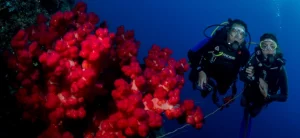
Do you remember the zooxanthellae, those algae that provide food to corals? These algae are known for their striking colors, which they obtain through photosynthesis. They are responsible for the coloration of corals: yellow, red, purple, or green—whatever the color, it is thanks to zooxanthellae that coral reefs are so spectacular.
When coral bleaching occurs, it is because the zooxanthellae die due to rising water temperatures that are too warm for them. Without zooxanthellae, corals lose their food source and also die. That is why the more vibrant the coral colors are, the more food they have and the healthier they will be.
4. Clear water
Often, when we dive on coral reefs, we are left speechless by their crystal-clear waters. This is also a sign that the reef is healthy, since pollution or an uncontrolled increase of certain algae often makes the water murky, preventing corals from receiving the sunlight they need to carry out photosynthesis.

5. Presence of large predators
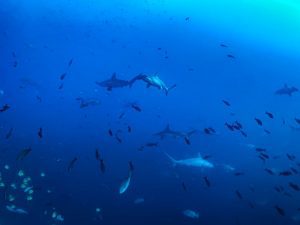
Finally, a very good sign that a coral reef is healthy is the presence of large predators such as sharks.
If you remember the order of food webs, large predators are the last to arrive, because for them to feed there must be carnivores, and for carnivores to feed there must be herbivores, and for herbivores to feed…
I’m sure you already understand where we’re going with this. That’s why the more sharks you see on your next dive, the more it will be a sign that there is plenty of food for them, which means the reef is full of life and healthier.
Now that you know this information and understand how valuable it is, there are small actions that can make a difference in protecting these ecosystems. One of them is as simple as sharing it with your fellow marine life lovers. And now we ask you: are you ready to put it into practice on your next dive?
Related articles: